
Starting cardio when you’re overweight can feel overwhelming. Many popular workouts—running, jumping, fast HIIT—put unnecessary stress on the knees, hips, and lower back. That discomfort often leads to one outcome: stopping before results ever appear.
Here’s the truth as an experienced fitness writer: you do not need high-impact exercise to lose weight. In fact, for overweight beginners, low-impact cardio is usually the most effective and sustainable place to start.
This guide explains what low-impact cardio really means, why it works so well for beginners, and how to choose options (and equipment) that help you move consistently without hurting your body.
What “Low-Impact Cardio” Really Means
Low-impact cardio refers to movements where:
-
At least one foot stays on the ground
-
Joint stress is minimized
-
Movements are controlled rather than explosive
Low-impact does not mean low effort. You can still elevate your heart rate, burn calories, and improve endurance—just without pounding your joints.
Why Low-Impact Cardio Is Ideal for Overweight Beginners
Extra body weight increases the force placed on joints during movement. High-impact exercises amplify that force. Low-impact cardio reduces it—while still allowing meaningful calorie burn.
Key benefits:
-
Less knee, hip, and back strain
-
Lower injury risk
-
Faster recovery between sessions
-
Easier habit formation
For beginners, consistency beats intensity every time. Low-impact cardio makes consistency realistic.
The Best Low-Impact Cardio Options (Beginner-Friendly)
1. Walking (The Most Underrated Option)
Walking is one of the safest and most effective ways to start.
Why it works:
-
Natural movement pattern
-
Easy to control pace
-
Steady calorie burn
-
Can be done almost anywhere
Start with 10–15 minutes and gradually build up. Speed matters far less than time spent moving.
2. Incline Walking (When You’re Ready)
Once flat walking feels comfortable, adding a slight incline increases effort without adding impact.
Benefits:
-
Higher heart rate at the same speed
-
More muscle engagement (especially glutes)
-
Better fat-burning efficiency
Incline walking works especially well on treadmills where incline can be adjusted gradually.
3. Elliptical Trainer
Ellipticals use a smooth, gliding motion that removes most joint stress.
Why beginners like ellipticals:
-
No pounding on knees or ankles
-
Full-body movement (arms + legs)
-
Easier to stay on longer
Many overweight beginners burn more total calories on ellipticals simply because they can exercise longer.
4. Recumbent Bike
A recumbent bike places you in a seated, supported position.
Best for:
-
Knee or lower-back sensitivity
-
Very low starting fitness
-
Longer, comfortable sessions
It may feel easy at first—but duration adds up quickly.
5. Swimming or Water Walking (If Available)
Water supports your body weight, drastically reducing joint load.
Why it’s effective:
-
Near-zero impact
-
Natural resistance from water
-
Excellent for endurance
This is one of the safest cardio options if you have access to a pool.
6. Low-Impact Home Cardio (No Equipment)
You can raise your heart rate at home with:
-
Marching in place
-
Step-backs
-
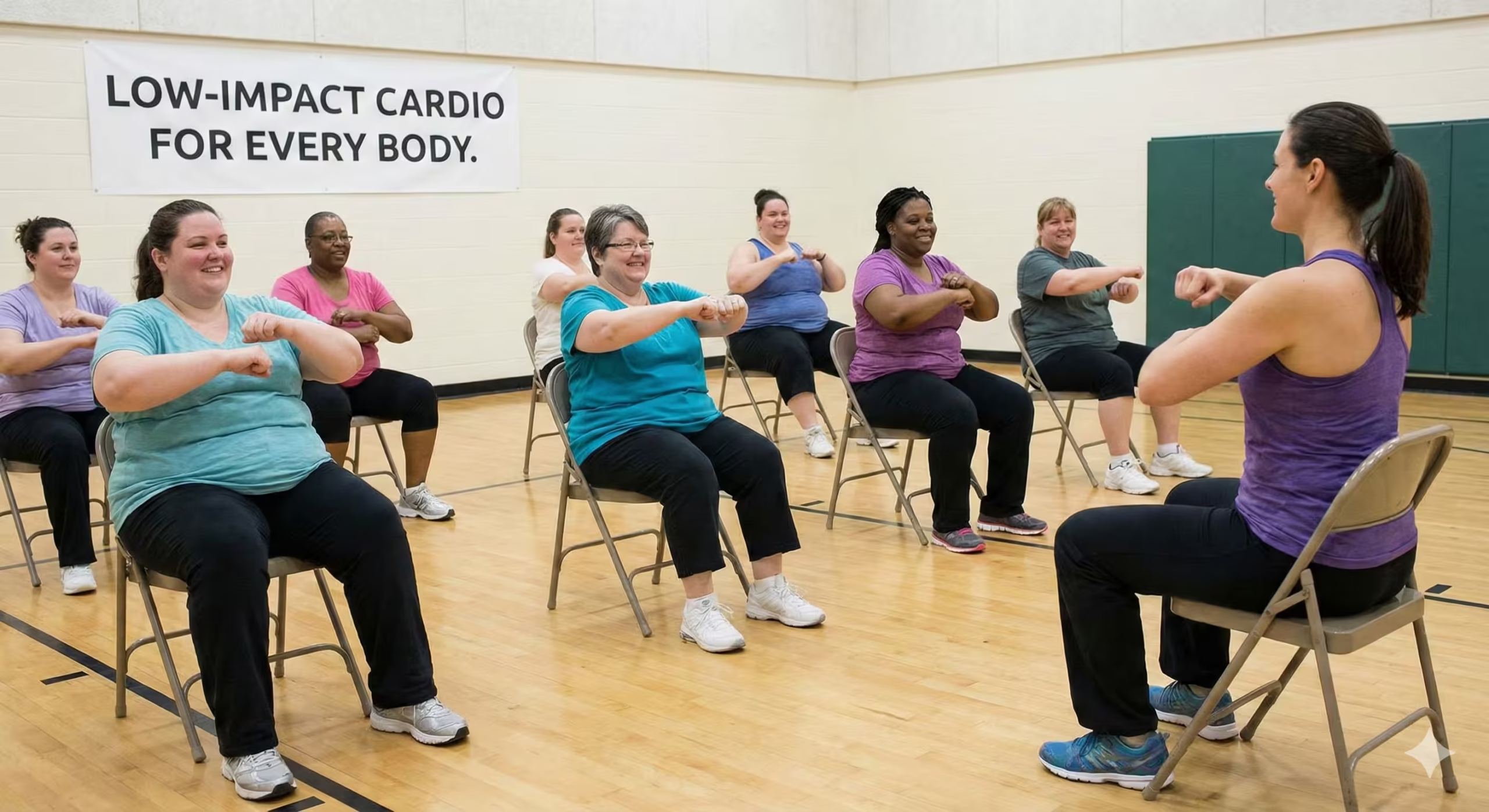
Seated cardio movements
-
Gentle dance-style routines
The goal is steady movement, not exhaustion.
How Often and How Long Should You Do Cardio?
Beginner Starting Point
-
Frequency: 3–4 days per week
-
Duration: 10–20 minutes
-
Intensity: Able to talk, but slightly breathless
Progression Goal
-
Build up to 30–45 minutes, 4–5 days per week
-
Increase time first, then intensity
If your joints feel worse the next day, scale back slightly.
Exercises to Avoid Early On
Most overweight beginners should delay:
-
Jumping workouts
-
Sprinting
-
Plyometrics
-
High-impact HIIT
-
Long-distance running
These are optional later—not required for weight loss.
Common Beginner Mistakes
-
Doing too much too soon
-
Choosing intensity over comfort
-
Ignoring joint pain
-
Comparing progress to others
-
Skipping recovery days
Progress comes from repeatable effort, not punishment.
Does Low-Impact Cardio Actually Help With Weight Loss?
Yes—when done consistently.
Low-impact cardio:
-
Burns calories
-
Improves insulin sensitivity
-
Builds endurance
-
Supports daily movement
Many beginners lose weight faster with low-impact cardio because they can do it more often and for longer periods.
Safe Equipment Recommendations (Beginner Friendly)
Best Overall for Walking & Progression
Choose: A walking-focused treadmill, ideally with incline.
Why it helps:
Incline walking increases calorie burn without increasing joint stress.
What to look for:
-
5–10% incline
-
Cushioned deck
-
Quiet motor
-
Foldable design for home use
👉 Compare walking treadmills with incline on Amazon
Best for Joint Comfort
Choose: An elliptical trainer.
Why it helps:
Smooth motion allows longer, pain-free sessions.
What to look for:
-
Stable frame
-
Smooth stride
-
Adjustable resistance
👉 View home ellipticals designed for low-impact cardio on Amazon
Best for Knee or Back Sensitivity
Choose: A recumbent exercise bike.
Why it helps:
Seated support reduces joint and spinal stress.
👉 Browse recumbent bikes for beginners on Amazon
Best for Small Spaces & Daily Movement
Choose: A walking pad.
Why it helps:
Encourages frequent, low-impact movement throughout the day.
👉 See walking pads for home use on Amazon
Best No-Equipment Add-On
Choose: A quality exercise mat.
Why it helps:
Improves comfort and safety for home cardio movements.
👉 Compare beginner exercise mats on Amazon
Final Takeaway
If you’re overweight and just getting started, low-impact cardio is not a compromise—it’s a smart strategy.
Start where your body feels safe.
Move often.
Increase time gradually.
Protect your joints.
Weight loss doesn’t require pain.
It requires consistent movement you can maintain.
