Resistance bands are one of the simplest and smartest tools for getting stronger—especially if you’re a beginner. They’re affordable, easy on the joints, require almost no space, and can be used for strength training, weight loss, mobility, and rehab.
But with so many types and resistance levels available, beginners often buy the wrong bands—and either find them too hard, too easy, or unsafe.
This guide explains exactly how to choose the right resistance bands, step by step, in plain lang uage—so you buy once and actually use them.
Why Resistance Bands Are Ideal for Beginners
Resistance bands create tension throughout an entire movement. Unlike dumbbells, where gravity does most of the work, bands keep your muscles engaged from start to finish.
For beginners, this means:
-
Lower injury risk
-
Better muscle control
-
Easier progression
-
Less stress on joints
They’re especially useful if you:
-
Work out at home
-
Have limited space
-
Are returning after a break
-
Want strength training without heavy weights
Step 1: Understand the Different Types of Resistance Bands
Not all resistance bands are interchangeable. Choosing the right type matters just as much as choosing the right resistance.
1. Loop Bands (Mini Bands)
What they are:
Small, continuous loops.
Best for:
-
Glutes and legs
-
Warm-ups and activation
-
Beginners learning movement control
Why beginners like them:
They’re simple, stable, and easy to use—especially for lower-body exercises.
2. Long Loop Bands (Power Bands)
What they are:
Large continuous loops, longer and thicker than mini bands.
Best for:
-
Full-body strength training
-
Squats, presses, rows
-
Assisted pull-ups (later on)
Beginner note:
Very versatile, but start with light resistance to avoid poor form.
3. Tube Bands with Handles
What they are:
Elastic tubes with handles on each end.
Best for:
-
Chest presses, rows, curls
-
People transitioning from dumbbells
-
Beginners who prefer a firm grip
These feel familiar and are often the easiest for first-time strength training.
4. Therapy / Rehab Bands (Flat Bands)
What they are:
Flat, stretchable strips without handles or loops.
Best for:
-
Rehab and mobility
-
Seniors
-
Very low-resistance training
Excellent if you’re rebuilding strength or prioritizing joint health.
Step 2: Choose the Right Resistance Level (Most Important Step)
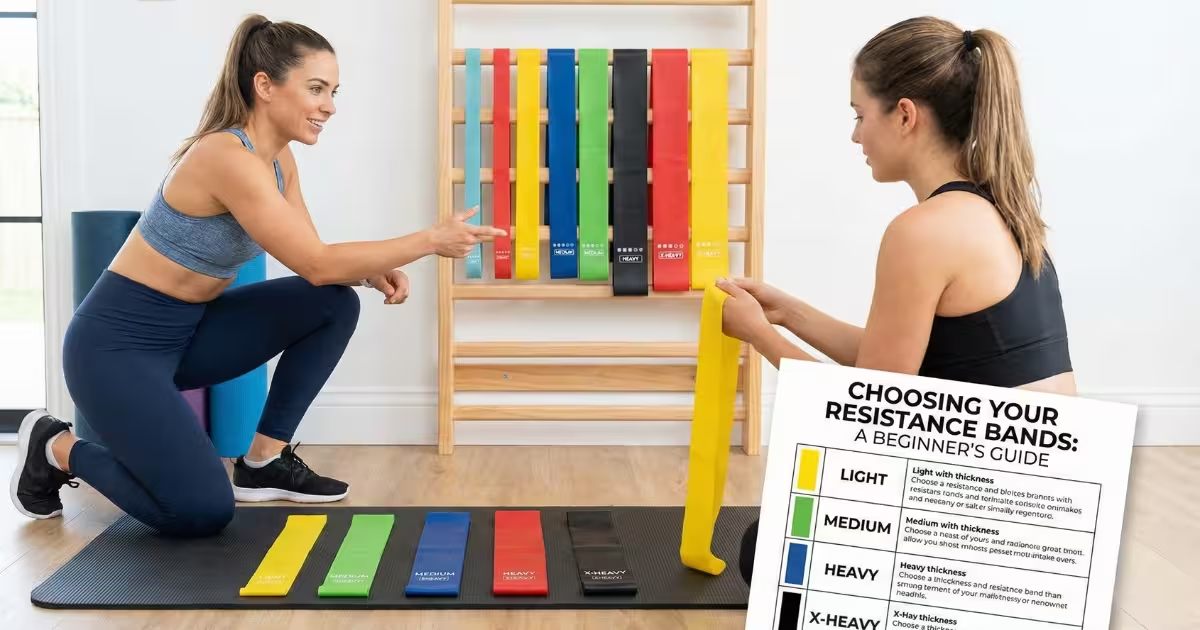
Resistance bands usually use color coding to indicate resistance. While colors vary by brand, the progression is generally the same.
Beginner-Friendly Guidelines
| Resistance Level | Best For |
|---|---|
| Extra Light | Rehab, mobility, seniors |
| Light | Absolute beginners |
| Medium | Beginners building strength |
| Heavy | Intermediate users |
Golden rule:
👉 If you’re unsure, start lighter. Proper form matters more than resistance.
Step 3: Match Bands to Your Fitness Goals
For General Fitness & Weight Loss
-
Light to medium resistance
-
Higher reps, controlled pace
-
Full-body routines
For Strength Building
-
Medium resistance first
-
Slower reps, more tension
-
Compound movements
For Joint Safety or Rehab
-
Extra-light or therapy bands
-
Focus on range of motion and control
For Seniors or Low-Impact Training
-
Loop or therapy bands
-
Seated or supported exercises
Step 4: Single Band or Full Set—What Should Beginners Buy?
Buy a Single Band If:
-
You’re testing resistance training
-
You’re rehabbing or doing light movement
-
You want the lowest cost option
Buy a Set If:
-
You want long-term progress
-
You plan full-body workouts
-
You don’t want to rebuy later
Best beginner choice:
👉 A set with light, medium, and heavy bands gives flexibility and progression.
Safe Resistance Band Recommendations (What to Look For)
Instead of chasing brand names, focus on features that matter.
Best Overall for Beginners
Look for a resistance band set that includes multiple resistance levels.
Why it works:
-
Start light, progress gradually
-
Covers full-body workouts
-
Better long-term value
👉 View beginner resistance band sets on Amazon
Best for Absolute Beginners or Rehab
Choose extra-light therapy bands or very light loop bands.
Why it works:
-
Extremely joint-friendly
-
Ideal for relearning movement
-
Safer for seniors
👉 See light resistance therapy bands on Amazon
Best for Dumbbell-Style Exercises
Choose tube bands with handles.
Why it works:
-
Comfortable grip
-
Familiar movement patterns
-
Easy transition from weights
👉 Browse tube resistance bands with handles on Amazon
Best for Legs & Glutes
Choose loop (mini) bands with non-slip material.
Why it works:
-
Excellent muscle activation
-
Easy to control
-
Beginner-friendly
👉 Compare loop resistance bands on Amazon
Step 5: Quality and Safety Checks (Don’t Skip This)
Cheap bands can snap. Before buying, check for:
-
Thick, durable material
-
Smooth edges (no cracks or thinning)
-
Non-slip texture (for loop bands)
-
Reinforced handles (for tube bands)
Replace bands immediately if you see cracks or overstretching.
Common Beginner Mistakes to Avoid
-
Choosing bands that are too heavy
-
Using momentum instead of control
-
Skipping warm-ups
-
Stretching bands beyond safe range
-
Ignoring rest days
Resistance bands reward control, not speed.
Are Resistance Bands Enough to See Results?
Yes—especially for beginners.
Resistance bands can:
-
Build muscle
-
Support weight loss
-
Improve mobility
-
Protect joints
-
Encourage consistency
Many beginners get better results with bands because they’re easier to stick with than heavy equipment.
Final Takeaway
Choosing the right resistance bands isn’t about buying the strongest option—it’s about choosing resistance that matches your current ability.
If you’re just starting:
-
Go lighter than you think
-
Focus on form
-
Progress gradually
-
Buy quality, not gimmicks
Resistance bands are one of the most beginner-friendly fitness tools available—and when chosen correctly, they can support your progress for years.