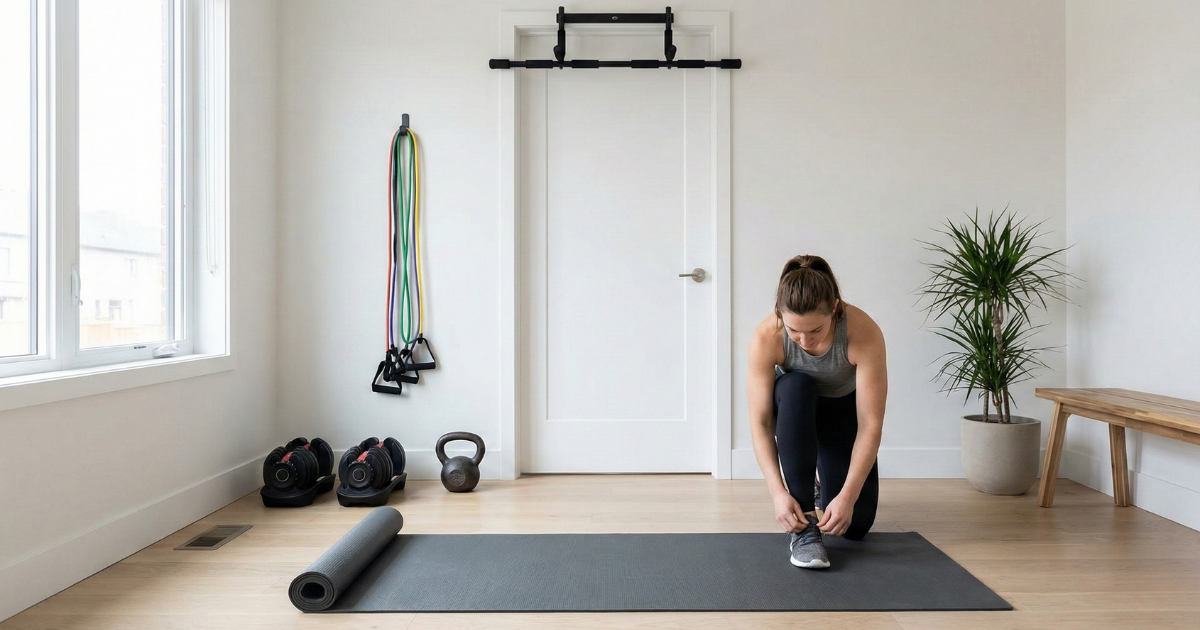
When beginners think about strength training, they often imagine big gyms filled with machines and heavy weights. This can feel scary and expensive. The truth is, strength training does not start with machines.It starts with simple tools that help your body move safely and correctly.
The right tools help you learn good form, protect your joints, and build strength step by step. Below are the 10 most useful strength training tools for beginners, with clear explanations so you understand why each one matters.
1. Adjustable Dumbbells (The Foundation of Strength Training)
Adjustable dumbbells are the most important strength training tool for beginners. They allow you to train almost every muscle in your body using natural movements like pushing, pulling, and lifting.
The biggest benefit of dumbbells is progress. You can start with light weight and slowly add more as your muscles grow stronger. This gradual increase is how muscles actually grow.
Dumbbells also help improve balance and coordination because each arm works independently. This reduces muscle imbalance and builds real-world strength.
👉 If you only buy one tool, buy adjustable dumbbells.
2. Resistance Bands (Safe Learning Tool for Beginners)
Resistance bands are excellent for beginners because they are gentle on the joints and easy to control. Instead of lifting heavy weight, you work against stretch resistance, which reduces injury risk.
Bands help beginners learn correct movement patterns. They are also great for warming up muscles before using weights and for recovery days when your body feels tired.
Another big advantage is flexibility. Bands take almost no space and can be used anywhere.
👉 Perfect for beginners who want to train safely and confidently.
3. Exercise or Yoga Mat (Protection and Comfort)
A mat may not look like a strength tool, but it plays an important role. Many strength exercises happen on the floor, such as planks, push-ups, glute bridges, and core work.
Without a mat, pressure on knees, elbows, and lower back can cause discomfort or pain. A good mat protects your joints and makes workouts more comfortable, which helps you stay consistent.
👉 Comfort reduces excuses.
4. Kettlebell (Simple Full-Body Tool)
A single kettlebell can give you a strong full-body workout. It is especially useful for strength and conditioning together.
You can use it for:
-
Squats
-
Swings
-
Deadlifts
-
Core exercises
👉 One kettlebell can challenge your whole body.