

Let’s be honest—most of us don’t plan to eat at the mall food court or a drive-through. It just happens. Meetings run late. Kids need picking up. Cooking feels impossible. Convenience wins.
And that’s normal.
Eating out doesn’t mean you’ve failed at healthy eating. It just means the meal looks different than what you’d make at home. The goal isn’t perfection—it’s making slightly better choices when you can, without stress or guilt.
Here are 7 simple, realistic tips I use with clients to help them eat well when dining out—without turning the meal into a math problem.
1. Take a Quick Look at the Menu (Even for a Minute)
The “healthiest-sounding” option isn’t always the best one. A veggie burger, loaded with sauces and fried toppings, can easily pack more calories and sodium than a grilled chicken sandwich.

Scanning the menu—online or at the counter—helps you:
-
Spot protein-forward options
-
Avoid impulse ordering
-
Build a simple game plan before hunger takes over
Many restaurants now list nutrition info online or in-store, which can be helpful if you’re tracking specific nutrients.
Read More – High-Protein Breakfast Smoothies: A Complete Guide for Energy & Fullness
2. Prioritize Protein + Fiber (This Combo Matters)
If there’s one habit that consistently helps people feel satisfied after eating out, it’s this:
Protein + fiber at the same meal
Protein helps keep you full and supports muscle health. Fiber slows digestion and reduces hunger later.
Look for:
-
Grilled chicken, fish, tofu, eggs, or beans
-
Vegetables, whole grains, beans, or legumes
This combo doesn’t need to be perfect—just present.
3. Pay Attention to How Food Is Prepared
The cooking method often matters more than the food itself.
Words that usually signal higher calories and sodium:
-
Fried
-
Breaded
-
Crispy
-
Smothered
That doesn’t mean you can’t enjoy fries or crispy food—it just means your main dish is better off prepared using methods like:
-
Grilled
-
Roasted
-
Baked
-
Steamed
-
Broiled
Small shifts add up quickly.
4. Don’t Fear Carbs—Choose the Ones You Enjoy Most
Carbohydrates aren’t the enemy. They’re one of the body’s main energy sources.
The key is choosing carbs intentionally, not automatically.
Examples:
-
Swap fries for a side salad or fruit when you don’t really want fries
-
Choose whole grains when available
-
Skip the bun if you’d rather have potatoes—or keep the bun and skip the fries
There’s no single “right” choice—just the one that feels most satisfying to you.
5. Be Strategic with Sauces and Add-Ons
Dressings, spreads, and sauces can quietly add a lot of calories, fat, and sodium.
You don’t need to avoid them—just use them with intention:
-
Ask for sauces on the side
-
Use a little instead of all
-
Choose one favorite add-on instead of several
Flavor matters. Overdoing it usually doesn’t improve the meal anyway.
6. Respect Portion Sizes (Without Restricting)
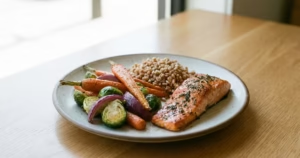
Restaurant portions have grown dramatically over the years. You don’t need to clean your plate to “get your money’s worth.”
Try one of these:
-
Order a regular size instead of upsizing
-
Split an entrée with someone
-
Save half for later
-
Make a meal from an appetizer + side
The goal is to feel satisfied, not uncomfortably full.
7. Track for Awareness—Not Perfection
Tracking what you eat (even loosely) can help you:
-
Understand patterns
-
Spot nutrient gaps (like fiber)
-
Make informed choices next time
Apps like MyFitnessPal make dining out easier by including many restaurant menus. Tracking isn’t about judgment—it’s about awareness.
Bottom Line
Eating out is part of real life. It doesn’t cancel your health goals.
A few simple habits—prioritizing protein and fiber, choosing grilled over fried, being mindful with portions—can make a meaningful difference over time.
Most importantly, let go of the idea that every meal needs to be perfect. Progress happens through flexibility, not rigidity.
Eat, enjoy, move on.