

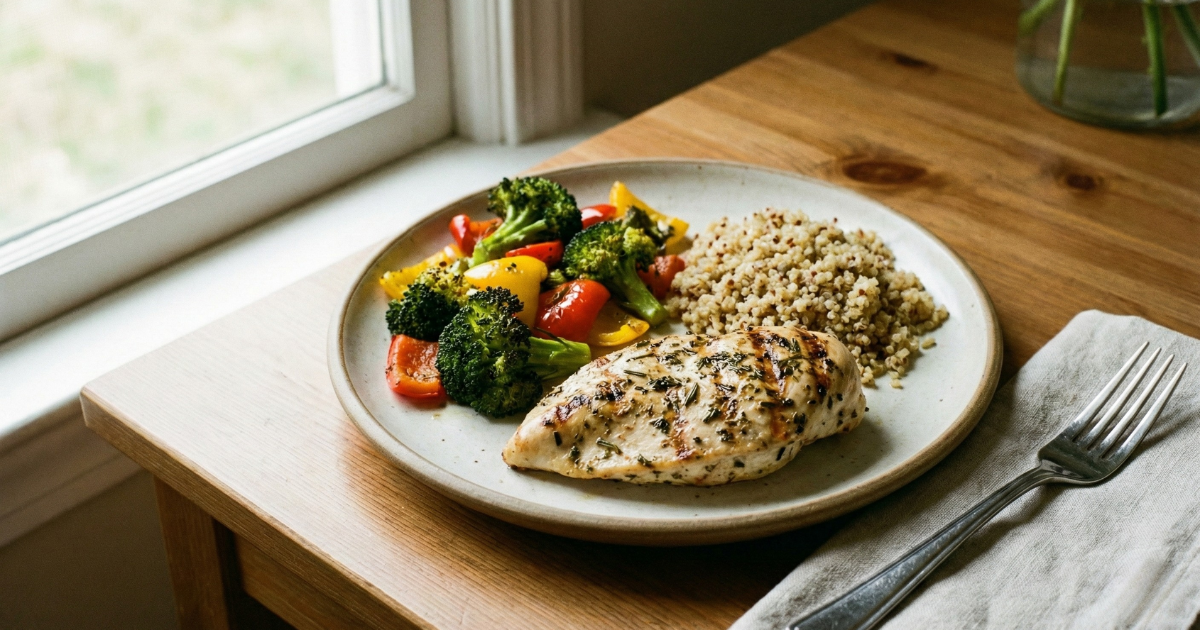
A calorie deficit meal plan is often talked about—but rarely explained in a way that feels realistic, sustainable, and human. Many people imagine tiny portions, constant hunger, or cutting out entire food groups.
That’s not what a good calorie deficit looks like.
In practice, a calorie deficit meal plan is about structure, balance, and smarter choices, not deprivation. This guide walks you through what a calorie deficit actually is, what meals look like day to day, and how to build one you can stick to.
What Is a Calorie Deficit? (Plain English)
A calorie deficit simply means:
You consume fewer calories than your body uses over time
That’s it.
No special foods. No magic timing. No extreme restriction.
Fat loss happens when this deficit is:
-
Moderate (not aggressive)
-
Consistent
-
Paired with enough protein and nutrients
What a Healthy Calorie Deficit Is (For Most People)
A sustainable deficit usually looks like:
-
300–500 calories below maintenance
-
Slow, steady weight loss
-
Enough food to fuel daily life and workouts
Bigger deficits may work short term, but often lead to:
-
Fatigue
-
Muscle loss
-
Increased hunger
-
Burnout
You can also read- Coconut Pancakes With Mango Puree
What a Calorie Deficit Meal Plan Actually Looks Like
A good calorie deficit meal plan is built around high-volume, nutrient-dense foods that keep you full.
The Core Structure
Each meal usually includes:
-
Protein (to preserve muscle and control hunger)
-
Fiber-rich carbs (vegetables, fruit, whole grains)
-
Healthy fats (in controlled amounts)
-
Enough volume to feel satisfied
Sample Day: Calorie Deficit Meal Plan (Balanced & Realistic)
⚠️ This is an example—not a prescription. Portions vary by person.
🥣 Breakfast
Greek yogurt bowl
-
Plain Greek yogurt
-
Berries
-
Chia or flax seeds
Why it works:
High protein + fiber = steady energy and fullness.
🍎 Mid-Morning Snack
-
Apple or banana
-
Handful of almonds or string cheese
Keeps hunger under control without overeating later.
🥗 Lunch
Protein-forward plate
-
Grilled chicken, fish, tofu, or beans
-
Large serving of vegetables
-
Quinoa, rice, or potatoes (moderate portion)
This looks like a normal meal—just better balanced.
Also read – High-Protein Breakfast Smoothies: A Complete Guide for Energy & Fullness
🥕 Afternoon Snack
-
Hummus with carrots
-
Cottage cheese
-
Protein shake (if needed)
Optional—but helpful if dinner is late.
🍽️ Dinner
Simple, satisfying
-
Lean protein (chicken, eggs, fish, lentils)
-
Roasted or sautéed vegetables
-
Small serving of carbs or healthy fats
You don’t need to avoid carbs at night—portion size matters more.
🍫 Optional Treat (Yes, Really)
-
A square of dark chocolate
-
Small dessert portion
Planned treats often prevent binge eating later.
What Portion Sizes Tend to Look Like
Instead of counting everything, many people succeed with visual portions:
-
Protein: palm-sized
-
Carbs: cupped hand
-
Fats: thumb-sized
-
Vegetables: half the plate
This keeps meals simple and flexible.
What Foods Work Best in a Calorie Deficit?
High-Satiety Foods
-
Lean proteins
-
Vegetables
-
Potatoes
-
Fruit
-
Whole grains
Foods to Be Mindful With (Not Avoid)
-
Oils
-
Nut butters
-
Cheese
-
Sugary drinks
They’re fine—just easier to overeat.
Common Calorie Deficit Mistakes
-
Eating too little too fast
-
Skipping protein
-
Cutting carbs completely
-
Relying only on “diet” foods
-
Ignoring hunger cues
A deficit should feel manageable, not miserable.
Do You Need to Track Calories?
Not always.
Some people do well with:
-
Portion control
-
Plate method
-
Consistent meal patterns
Others prefer tracking—especially at first—for awareness.
Both approaches can work.
How Long Should You Stay in a Calorie Deficit?
Most people benefit from:
-
6–12 weeks in a deficit
-
Followed by a short maintenance phase
This helps prevent metabolic slowdown and mental burnout.
What Results Should You Expect?
A healthy pace:
-
~0.25–0.75 kg (0.5–1.5 lb) per week
-
Some weeks faster, some slower
Consistency beats speed.
Final Takeaway
A calorie deficit meal plan isn’t about eating less food—it’s about eating the right mix of foods.
When done well, it:
-
Keeps you full
-
Preserves muscle
-
Supports steady fat loss
-
Fits real life
If your plan feels punishing, it’s not sustainable—and sustainability is what makes fat loss last.
