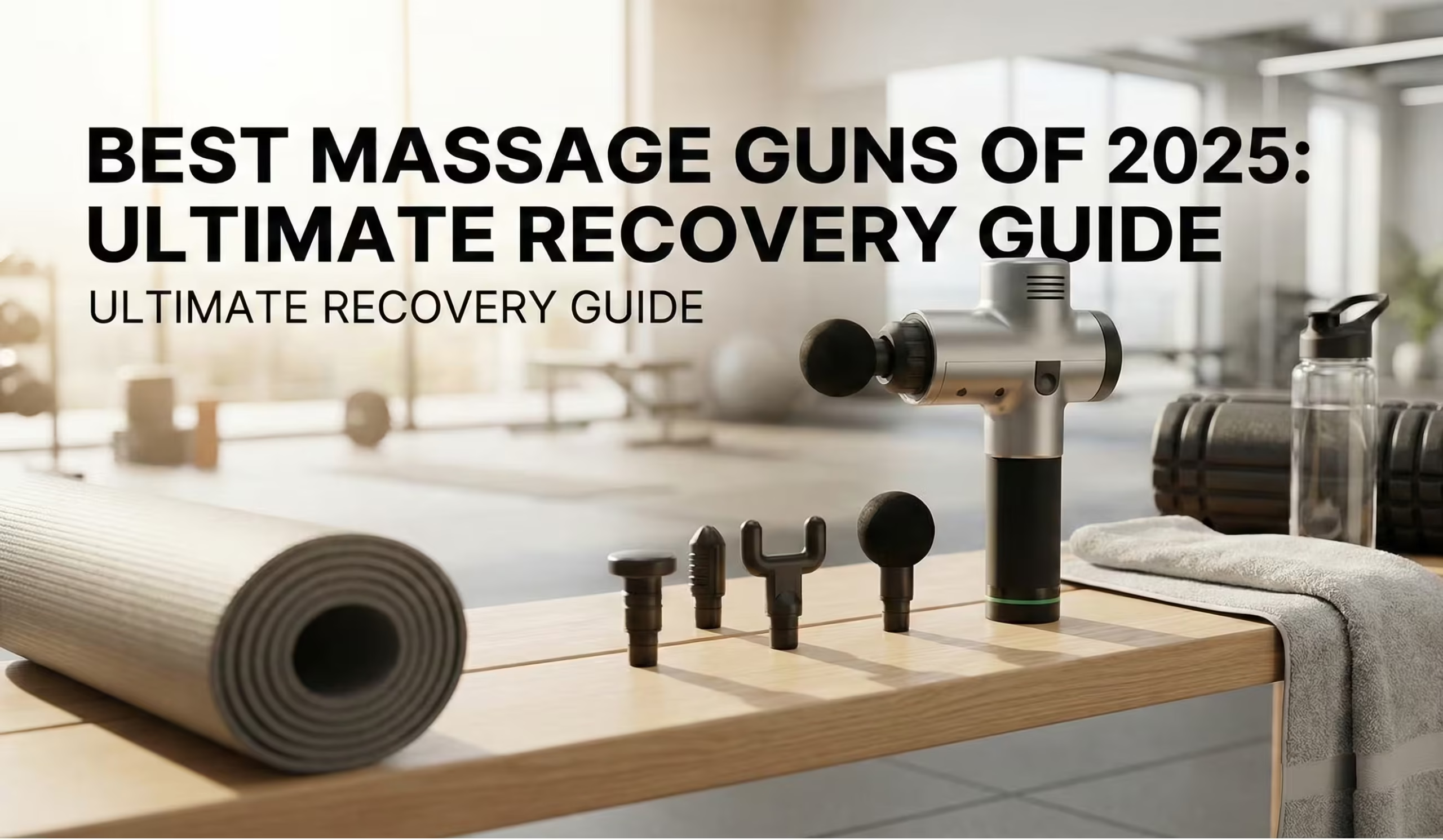
We analyzed the market based on amplitude, stall force, ergonomics, and value to bring you the definitive list for 2025.
1. Best Overall (The Gold Standard): Therabody Theragun PRO Plus
This isn’t just a massage gun; it’s a complete recovery device. The PRO Plus builds on Theragun’s legendary percussive power but adds heat therapy, vibration, and even near-infrared light therapy.
-
Amplitude: 16mm (Deep tissue depth)
-
Stall Force: 60 lbs (Professional power)
-
Battery Life: 150 minutes
-
Weight: 3.6 lbs (1.65 kg)
Why It Wins: It offers the deepest treatment on the market. The 16mm amplitude reaches deep into muscle tissue to release tough knots that other guns simply glide over. The unique triangular handle allows you to reach 80% of your body (like your own back) without straining your wrist.
✅ Pros:
-
Multi-Therapy: Includes percussion, heat, and near-infrared LED light therapy in one device.
-
Ergonomics: Patented triangle grip offers 4 holding positions.
-
Smart Integration: Connects to the Therabody app via Bluetooth to control speed and run guided routines.
❌ Cons:
-
Price: It is the most expensive option on the list.
-
Loudness: While quieter than older models, the powerful motor is still audible.
2. Best Quiet Operation: Hyperice Hypervolt 2 Pro
Hyperice is the preferred partner of the NBA and many pro leagues. The Hypervolt 2 Pro balances raw power with a sleek, sophisticated design and whisper-quiet operation.
-
Amplitude: 14mm
-
Stall Force: 60 lbs
-
Battery Life: 3 hours
-
Weight: 2.6 lbs (1.18 kg)
Why It Wins: If you live in an apartment or want to watch TV while recovering, this is your best choice. It features “QuietGlide” technology that dampens the motor noise significantly. It also utilizes a digital dial, making it incredibly intuitive to cycle through the 5 speed settings.
✅ Pros:
-
Pressure Sensor: Visual LED lights show exactly how much pressure you are applying.
-
App Integration: The Hyperice app automatically adjusts the speed of the gun based on the routine you select.
-
Smoothness: The percussion feels less “punchy” and more fluid than the Theragun.
❌ Cons:
-
Handle Shape: The classic cylindrical handle can be slightly harder to hold for long sessions compared to angled grips.
Read More – Morning Stretching Routine for Busy People
3. Best Value & Ergonomics: Ekrin Athletics B37
For most home users, the Ekrin B37 is the perfect “sweet spot” between price and performance. It was developed with input from chiropractors and physical therapists.
-
Amplitude: 12mm
-
Stall Force: 56 lbs
-
Battery Life: 8 hours (Industry leading)
-
Weight: 2.2 lbs (1.0 kg)
Why It Wins: The defining feature is the 15-degree angled handle. This slight curve allows you to hold the device naturally without bending your wrist awkwardly. Combined with an industry-leading 8-hour battery life, it is a workhorse that rarely needs charging.
✅ Pros:
-
Lifetime Warranty: Ekrin offers a lifetime warranty, which is rare in this industry.
-
Battery Life: You can use it for weeks on a single charge.
-
Travel Case: Comes with a high-quality case and 4 attachments.
❌ Cons:
-
Depth: 12mm amplitude is great for most, but bodybuilders with very dense muscle mass might prefer the 16mm of the Theragun.
4. Best Budget-Friendly Option: Bob and Brad C2
Designed by the famous YouTube physical therapists “Bob and Brad,” this gun proves you don’t need to spend hundreds of dollars for effective relief.
-
Amplitude: 8mm
-
Stall Force: 40 lbs
-
Battery Life: Varies (USB-C Fast Charging)
-
Weight: 1.5 lbs (0.68 kg)
Why It Wins: It fits in your hand comfortably and is surprisingly powerful for its size. While it doesn’t offer “deep tissue” percussion (due to the 8mm amplitude), it provides excellent vibration therapy that is perfect for flushing out lactic acid and relaxing sore muscles after a standard workout.
✅ Pros:
-
Price: Unbeatable value for the build quality.
-
Portability: Small enough to fit in any gym bag or desk drawer.
-
USB-C Charging: Charges with the same cable as your phone or laptop.
❌ Cons:
-
Low Amplitude: The stroke is shallow, so it feels more like vibration than a deep massage.
-
Auto-Shutoff: It turns off automatically after 10 minutes (safety feature), which can be annoying during long sessions.
5. Best for Travel: Theragun Mini 2.0
The Mini 2.0 shrinks Theragun’s technology into a device the size of a large apple. It is 20% smaller and 30% lighter than the previous version.
-
Amplitude: 12mm
-
Stall Force: 20 lbs
-
Battery Life: 120 minutes
-
Weight: 1.0 lb (0.45 kg)
Why It Wins: Most “mini” guns are too weak to be useful. The Theragun Mini retains a 12mm amplitude, meaning it actually provides a percussive massage rather than just buzzing against your skin. The unique triangular shape is easy to grip and allows you to apply pressure effectively.
✅ Pros:
-
Ultimate Portability: Perfect for carry-on luggage or hiking packs.
-
Bluetooth: Now connects to the Therabody app (unlike the first version).
-
Quiet: Significantly quieter than the full-sized Theragun models.
❌ Cons:
-
Ergonomics: The shape can be slippery if your hands are sweaty.
-
Stall Force: 20 lbs is low; if you press too hard into a knot, the motor will stop.
⭐ Expert Tip: How to Use Your Massage Gun Safely
To get the most out of these devices, technique matters.
-
Don’t Press Hard: Let the gun “float” over the muscle. The weight of the device is usually enough.
-
Avoid Bone: Never use a massage gun on your spine, neck vertebrae, or joints (knees/elbows). Stick to the muscle belly.
-
Keep it Moving: Don’t stay on one spot for more than 15–30 seconds to avoid bruising or irritation.
-
Listen to Your Body: If it hurts (sharp pain), stop immediately. Percussive therapy should feel like “good pressure,” not sharp pain.
Ready to incorporate this into your recovery routine? For detailed video guides on how to use massage guns for specific injuries (like runner’s knee or tight shoulders), check out our resources at fitnessnala.com.