Building a home gym does not mean filling your room with machines, heavy weights, and expensive equipment. In fact, many people quit working out because their setup feels complicated and overwhelming. A minimalist home gym solves this problem.
A minimalist home gym focuses on only what you truly need. It saves space, saves money, and makes workouts easier to start and easier to continue. This guide will help you understand how to build a clean, simple, and effective home gym that fits your lifestyle.
What Does “Minimalist Home Gym” Really Mean?
A minimalist home gym is not about having less fitness. It is about having less clutter and more purpose.
Instead of many tools that you rarely use, you choose a few tools that:
-
Work your full body
-
Fit into small spaces
-
Are easy to store
-
Support daily workouts
The goal is simple: remove excuses and make movement easy.
Why a Minimalist Home Gym Works So Well
Most people do not fail because workouts are hard. They fail because starting feels difficult. A minimalist setup removes friction.
A simple home gym:
-
Reduces setup time
-
Feels less intimidating
-
Encourages daily use
-
Fits into apartments and small rooms
When your equipment is simple and visible, you are more likely to use it.
👉 Simple setups create consistent habits.
Step 1: Choose the Right Space (Small Is Fine)
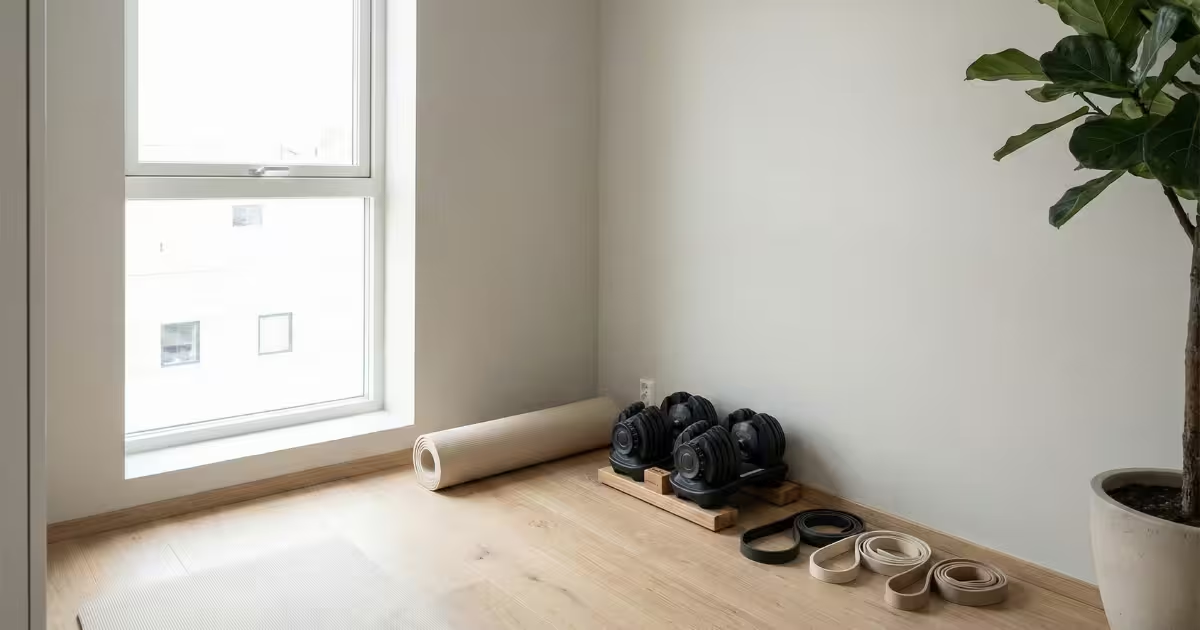
You do not need a full room. A small corner is enough.
Good places for a minimalist home gym include:
-
A corner of your bedroom
-
Living room space near a window
-
Balcony or small indoor area
What matters is:
-
Enough space to stand and move
-
Good airflow
-
A clean, calm feeling
👉 A peaceful space makes workouts feel easier.
Step 2: Start With the Most Important Equipment
Minimalism means choosing tools that do many jobs, not just one.
1. Adjustable Dumbbells (Core Tool)
Adjustable dumbbells are the heart of a minimalist gym. With one set, you can train your arms, chest, back, shoulders, and legs.
They allow:
-
Progressive strength gains
-
Full-body workouts
-
Long-term use
You can start light and increase weight slowly as you get stronger.
2. Resistance Bands (Light, Flexible, Powerful)
Resistance bands are perfect for minimalist setups because they take almost no space. They are great for warm-ups, recovery, and joint-friendly workouts.
They help with:
-
Mobility
-
Light strength training
-
Stretching
Bands also work well on days when you feel tired but still want to move.
3. Exercise or Yoga Mat (Comfort Tool)
A mat protects your knees, back, and elbows during floor exercises. It also creates a clear “workout zone” in your home.
A mat is useful for:
-
Core exercises
-
Stretching
-
Bodyweight workouts
👉 Comfort helps consistency.
Step 3: Keep Equipment Count Low on Purpose
A minimalist home gym usually needs 3 to 5 items only.
A simple example setup:
-
Adjustable dumbbells
-
Resistance bands
-
Exercise mat
-
Optional: kettlebell or jump rope
That’s enough for:
-
Strength training
-
Fat loss
-
Mobility
-
Cardio support
More equipment does not mean better results.
Step 4: Organize for Easy Access
How you store your equipment matters.
Good minimalist storage ideas:
-
Dumbbells under a bed or table
-
Bands in a small box or hook
-
Mat rolled and placed against a wall
When equipment is easy to reach, workouts feel effortless to start.
👉 Out of sight often means out of use.
Step 5: Focus on Simple, Repeatable Workouts
A minimalist gym works best with simple routines.
Instead of many exercises, focus on basics:
-
Squats
-
Push-ups or presses
-
Rows
-
Core movements
Repeat these movements regularly and slowly increase difficulty. This builds strength without complexity.
👉 Simple workouts done consistently beat complex plans.
Common Mistakes to Avoid
Many people break minimalism without realizing it.
Avoid:
-
Buying equipment “just in case”
-
Following social media trends
-
Adding tools before building habits
-
Ignoring recovery and stretching
Minimalism works only when you stay intentional.
Can You Build Muscle With a Minimalist Home Gym?
Yes, absolutely.
Muscle growth depends on:
-
Resistance
-
Progress over time
-
Consistency
Not on the number of machines you own.
Many strong, fit people train with very little equipment.
The Real Secret of a Minimalist Home Gym
The real power is not the setup.
It is how often you use it.
A simple gym that you use 4–5 times a week is far better than a perfect gym that you rarely touch.
You don’t need a big space or big budget to get fit.
You just need a smart, simple start.
👉 Build your minimalist home gym today
👉 Start with what you have
👉 Visit FitnessNala.com for simple, practical fitness guides
Less equipment. More consistency. Better results.