

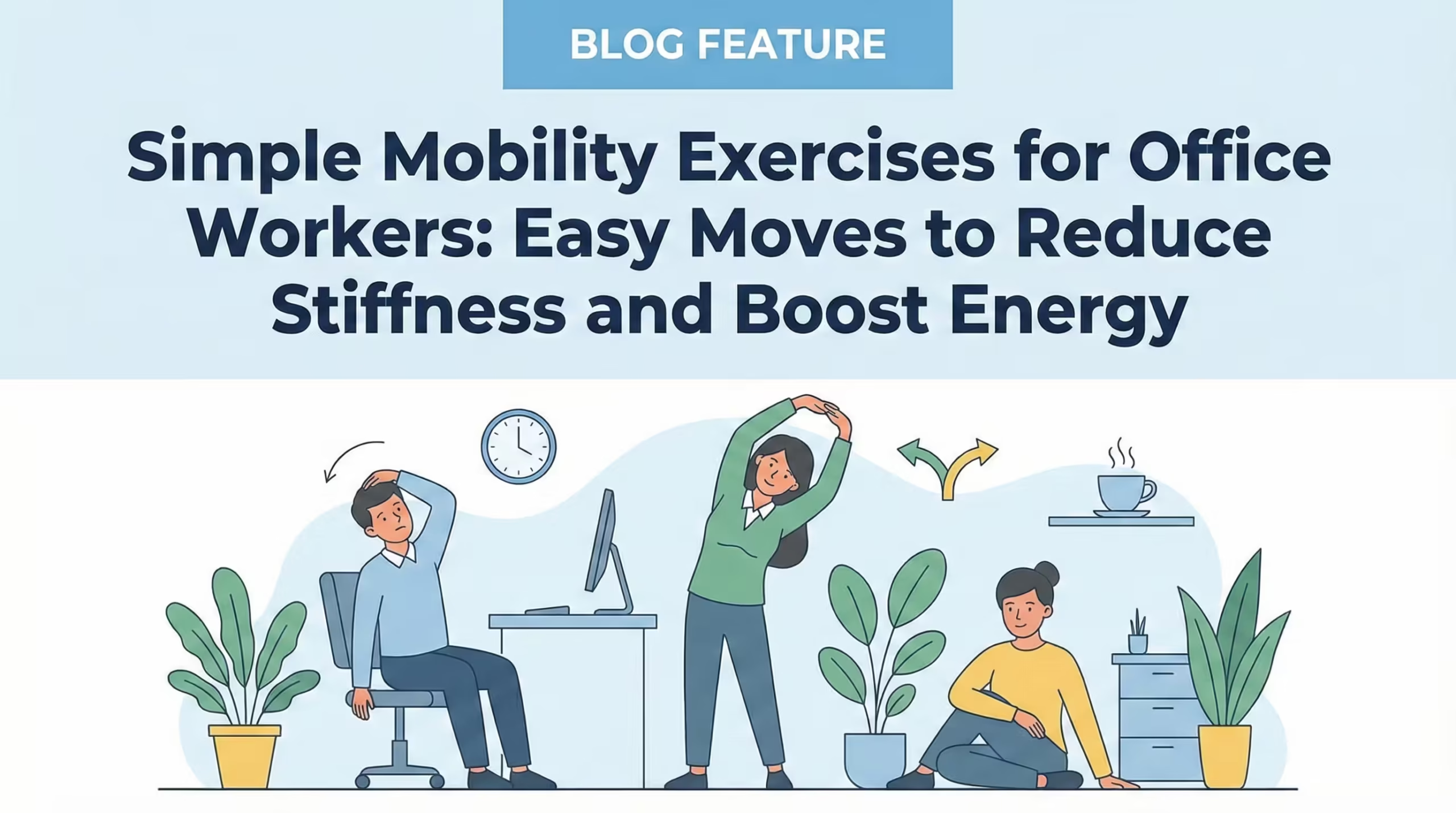
Many office workers sit for long hours every day — sometimes 6 to 10 hours or more. This can lead to stiff shoulders, tight hips, back pain, and low energy. The good news? You don’t need a gym or special equipment to feel better.
A few simple mobility exercises can help reduce pain, increase blood flow, and improve your posture — all from your desk.
This guide will walk you through easy, beginner-friendly exercises for your neck, shoulders, spine, hips, legs, wrists, and hands. Anyone can do them, and they take only a few minutes.
Why Office Workers Need Mobility Exercises
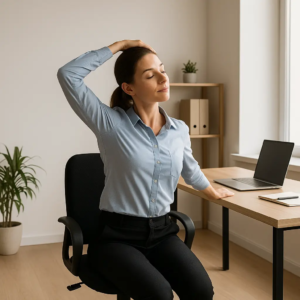
Sitting too long causes:
-
Tight neck and shoulders
-
Lower back pain
-
Poor posture
-
Weak hips and legs
-
Wrist and hand strain
-
Low energy and poor focus
Mobility exercises help:
-
Improve posture
-
Boost circulation
-
Reduce stiffness
-
Increase flexibility
-
Improve mood and energy
-
Prevent long-term injuries
Just a few minutes of movement can make a big difference in how you feel throughout the day.
Read – Morning Stretching Routine for Busy People
Neck & Shoulder Mobility Exercises
Sitting at a computer often causes hunching and tightness. These simple movements relax the upper body.
1. Neck Rotations
Time: 10–15 seconds each direction
Gently turn your head to the left, then to the right. You can also draw slow circles with your chin.
Helps with: stiffness, headaches, tension from screens.
2. Shoulder Rolls
Reps: 10 forward, 10 backward
Lift your shoulders up, roll them back, and drop them down. Then reverse the direction.
Helps with: shoulder tightness, improving posture.
3. Chin Tucks
Reps: 10
Sit tall and gently pull your chin back (like making a double chin). Keep your neck long.
Helps with: forward-head posture, tech neck.
4. Chest Stretch
Hold: 20–30 seconds
Clasp your hands behind your back or use a doorway to gently open your chest.
Helps with: tight chest muscles from slouching.
Spine & Torso Mobility Exercises
These help keep your back flexible and reduce lower back pain.
5. Seated Torso Twist
Hold: 20 seconds each side
Sit tall. Place one hand on the back of your chair and gently twist your upper body.
Helps with: spine mobility, back stiffness.
6. Seated Cat-Cow
Reps: 10
Sit on the edge of your chair. Arch your back (cow), then round your back (cat).
Helps with: loosening upper and lower back.
7. Thoracic Extension
Reps: 10–15
Sit tall, place hands behind your head, and gently lean back over your chair.
Helps with: upper-back tightness and breathing.
Hip & Leg Mobility Exercises
Long sitting weakens hips and reduces leg circulation. These moves help restore movement.
8. Chair Pigeon Pose
Hold: 20–30 seconds each side
Cross one ankle over the opposite knee and lean forward slightly.
Helps with: tight hips and lower back pain.
9. Seated Leg Extensions
Reps: 12–15 each leg
Straighten one leg and hold for a second before lowering.
Helps with: leg activation and blood flow.
10. Knee-to-Chest Stretch
Hold: 20 seconds each leg
Lift one knee and hug it gently toward your chest.
Helps with: glute tightness and lower-back relief.
Wrist & Hand Mobility Exercises
Perfect for people who type all day.
11. Wrist Flex & Extend
Reps: 10 each direction
Straighten your arm and gently bend your wrist up, then down.
Helps with: wrist stiffness, typing fatigue.
12. Finger Stretches
Reps: 10–15
Open your fingers wide, then close them into a fist.
Helps with: hand tension and grip strength.
Dynamic Desk-Friendly Exercises
These boost energy and break up long sitting periods.
13. Chair Squats
Reps: 10–15
Stand up from your chair and sit back down without fully resting.
Helps with: leg strength and waking up your body.
Also Read – Best Equipment for a Small Home Gym (2025 Guide)
14. Calf Raises
Reps: 15–20
Stand and lift your heels off the ground.
Helps with: improving circulation, ankle mobility.
15. Desk Push-Ups or Desk Plank
Reps: 10–12 push-ups / 20–30 second plank
Use a strong desk for incline push-ups or a quick plank.
Helps with: upper-body strength and core stability.
How Often Should You Do These Exercises?
For the best results:
-
Do 2–3 exercises every 30–60 minutes
-
Complete a full routine 2–3 times a day
-
Focus on slow, controlled movements
-
Remember: consistency matters more than intensity
Even 2–3 minutes of movement can improve your posture and energy.
Tips to Build a Healthy Desk Routine
Here are simple ways to stay consistent:
-
Set phone or computer reminders
-
Stretch during water or coffee breaks
-
Keep your chair and desk at the right height
-
Try standing for 5 minutes each hour
-
Pair stretching with deep breathing
Small habits → big improvements.
Final Thoughts
Mobility exercises don’t require a gym or special equipment — just a few minutes and a bit of consistency. Whether you’re an office worker, student, or anyone who sits a lot, these simple movements can help reduce stiffness, improve posture, and boost energy throughout the day.
Start with 2–3 exercises today and notice how much better your body feels.
FitnessNala.com — your friendly fitness hub offering simple workouts, honest wellness tips and motivation to help you build a healthy, sustainable lifestyle.
